Leica M11-P Hammertone
A Tradition Reimagined.
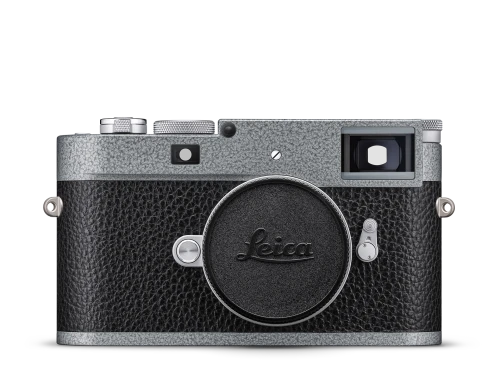
The Leica M11-P Hammertone brings a rare, textured finish from Leica's history into the digital M-System. No two finishes are exactly alike. Beneath its distinctive exterior is the proven technology of the Leica M11-P.
The Essentials
A Unique Finish
The distinctive hammertone texture gives each camera its own individual appearance.
German Craftsmanship
Solid brass, traditional detailing, and a specially crafted finish made in Wetzlar.
Proven M11-P Technology
A 60 MP full-frame sensor, 256 GB of internal memory, and Leica Content Credentials.
01 / The Finish
No Two Exactly Alike.
The M11-P Hammertone features a textured finish on its solid brass top and base plates. Created through a specialized painting process, each finish develops subtle variations that make every camera distinctive.
White engravings, traditional cross-knurled controls, and black vulcanite-style leatherette complete the classic design.
02 / The Heritage
A Finish With History.
Hammertone finishes have been associated with durable, precise instruments since the 1930s. Their distinctive textured appearance became a recognizable part of industrial design, especially in Germany.
Leica has used this finish only rarely on cameras, including a small series of Leica MD cameras produced in 1964. The M11-P Hammertone continues that design tradition.
03 / Craftsmanship
Made With Precision in Wetzlar.
Creating the hammertone texture requires careful control of the painting and drying process. Metallic pigments and special additives form the characteristic pattern as the finish develops.
Experienced specialists at the Leica factory in Wetzlar carefully produce and finish each camera. The result is an individual appearance grounded in Leica's longstanding tradition of craftsmanship.
04 / Design Details
Distinctive From Every Angle.
The solid brass construction, silver-colored controls, white engravings, and textured finish create a recognizable Leica aesthetic.
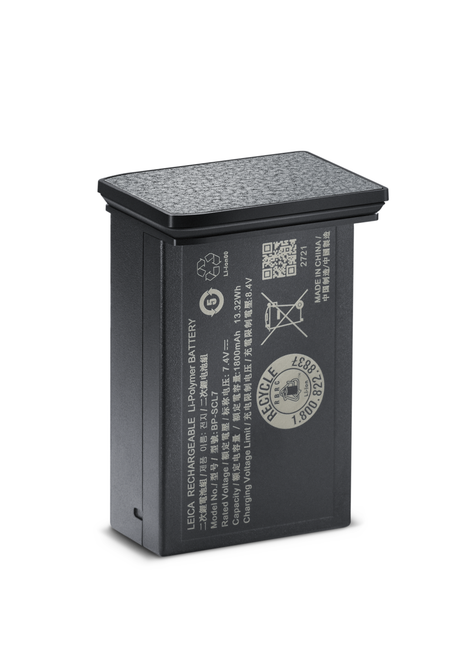
Even the included BP-SCL7 rechargeable battery features a matching hammertone finish, carrying the design through to a detail usually hidden from view.
05 / Image Quality
60 Megapixels. Total Creative Freedom.
The M11-P Hammertone uses the same full-frame BSI CMOS sensor as the standard M11-P. Triple Resolution Technology lets you capture DNG or JPEG photographs at 60, 36, or 18 megapixels.
The Maestro III processor supports a responsive shooting experience, while the Leica M bayonet gives you access to a wide range of interchangeable M lenses.
06 / Image Authenticity
The Story Behind Every Photograph.
Leica Content Credentials help photographers provide verifiable information about the origin of their images.
When enabled, the camera adds a digital signature and supported provenance information at capture. Compatible tools can then verify that information, supporting transparency in digital photography.
07 / Everyday Photography
Tradition Meets Modern Convenience.
With 256 GB of built-in memory and support for SD cards, the M11-P Hammertone offers flexible storage for DNG and JPEG files.
A sapphire-crystal rear screen provides excellent scratch resistance, while Bluetooth, Wi-Fi, and USB-C connectivity support a convenient workflow with the Leica FOTOS app.
Questions and Answers
Frequently Asked Questions About the Leica M11-P Hammertone
What makes the Leica M11-P Hammertone special?
The M11-P Hammertone features a distinctive textured paint finish on its solid brass top and base plates. Each camera has subtle variations in its appearance. Classic white engravings, cross-knurled controls, and black vulcanite-style leatherette complete the design. The camera retains the technical features of the standard M11-P.
How does the M11-P Hammertone differ from the standard M11-P?
The main differences are in the exterior design and finish. The Hammertone has textured brass top and base plates, special detailing, and a matching BP-SCL7 battery. Its sensor, processor, internal storage, and core photographic performance are the same as the standard M11-P.
Are all Leica M11-P Hammertone cameras identical?
No. The hammertone paint develops subtle variations during the finishing process. As a result, every camera has its own individual surface pattern, even though the design and technical specifications are consistent.
What is a hammertone finish?
Hammertone is a textured paint finish with a distinctive hammered appearance. Metallic pigments and special additives create subtle patterns as the coating dries. The finish has a long history in industrial design and has appeared on select Leica cameras and instruments.
Where is the Leica M11-P Hammertone made?
The Leica M11-P Hammertone is made in Germany. Its distinctive finish is carefully produced by experienced specialists at Leica's manufacturing facility in Wetzlar.
Does the Leica M11-P Hammertone include a matching battery?
Yes. The M11-P Hammertone includes a Leica BP-SCL7 rechargeable battery with a matching hammertone finish. It uses the same battery system as the standard Leica M11-P.
Does the Leica M11-P Hammertone come with a lens?
The M11-P Hammertone camera body uses interchangeable Leica M lenses. Unless a lens is specifically listed as part of a bundle, it is purchased separately. Photographers can choose a compatible lens based on their preferred focal length and shooting style.
What sensor does the Leica M11-P Hammertone use?
The M11-P Hammertone features a 60.3 MP full-frame BSI CMOS sensor. Leica Triple Resolution Technology allows photographs to be captured at approximately 60, 36, or 18 megapixels in DNG or JPEG format while using the full sensor area.
Does the Leica M11-P have autofocus?
No. The Leica M11-P is a manual-focus rangefinder camera. Photographers focus using the optical rangefinder or the camera's Live View focusing aids. This provides precise control over the focusing process.
How does the Leica M11-P rangefinder work?
The M11-P has an optical rangefinder with bright framelines. To focus, turn the lens focusing ring until the two images in the central rangefinder patch align. This allows you to focus manually while seeing the scene through an optical viewfinder.
What is the difference between the Leica M11 and M11-P?
Both cameras offer the Leica M rangefinder experience and 60 MP full-frame imaging. The M11-P adds Leica Content Credentials, 256 GB of internal storage, and a sapphire-crystal rear screen. The M11-P also features discreet exterior details, including the Leica script engraved on its top plate.
What are Leica Content Credentials?
Leica Content Credentials are an optional image authentication feature. When enabled, the camera digitally signs photographs and records supported information about their origin. This information can be checked using compatible verification tools, helping establish a verifiable record of where an image came from.
How much internal memory does the Leica M11-P have?
The Leica M11-P includes 256 GB of internal memory, along with an SD card slot supporting compatible UHS-I and UHS-II memory cards. Photographers can choose how to store their DNG and JPEG photographs.
Is the Leica M11-P screen made of sapphire glass?
Yes. The Leica M11-P features a rear screen made with scratch-resistant sapphire crystal glass and an anti-reflective coating. It is designed for durability and clear viewing in different lighting conditions.
What lenses work with the Leica M11-P?
The Leica M11-P uses the Leica M bayonet mount and supports current and many earlier Leica M lenses. Popular focal lengths include 28mm, 35mm, and 50mm. Specialized or older lenses should be checked for compatibility before use.
Can the Leica M11-P record video?
No. The Leica M11-P is dedicated to still photography and does not offer video recording. It focuses on the traditional Leica M photographic experience.
Can the Leica M11-P connect to a smartphone?
Yes. The Leica M11-P connects to the Leica FOTOS app using Bluetooth, Wi-Fi, or a compatible cable. The app supports transferring photographs and managing supported camera functions from a smartphone or tablet.
Can I use an electronic viewfinder with the Leica M11-P?
Yes. The optional Leica Visoflex 2 electronic viewfinder is compatible with the M11-P. It provides through-the-lens composition and electronic focusing aids, offering an alternative to the camera's built-in optical rangefinder.
Technical Data
Scroll to explore specifications ↓
Camera
| Designation | Leica M11-P Hammertone |
|---|---|
| Camera Type | Digital full-frame system camera with optical rangefinder |
| Design | Distinctive hammertone finish Solid brass top and base plates White engravings and classic cross-knurled controls Black vulcanite-style leatherette covering |
| Lens Mount | Leica M bayonet with sensor for 6-bit lens encoding |
| Buffer Memory | 3 GB DNG: approximately 15 images JPG: more than 100 images |
| Storage | 256 GB internal memory SD / SDHC / SDXC memory cards SDXC cards up to 2 TB UHS-I and UHS-II supported, UHS-II recommended |
| Operating Conditions | 0°C to +40°C |
| Interfaces | USB 3.1 Gen 1 Type-C ISO accessory shoe with Leica flash contacts Supports optional Leica Visoflex 2 electronic viewfinder |
| Tripod Thread | 1/4-inch DIN 4503 with stainless steel insert in the base |
Sensor and Image Quality
| Sensor | Full-frame BSI CMOS sensor, 60.3 megapixels |
|---|---|
| Sensor Resolution | 9528 x 6328 pixels |
| Pixel Pitch | 3.76 µm |
| Processor | Leica Maestro III |
| Sensor Filters | RGB color filter, UV/IR filter, no low-pass filter |
| Image File Formats | DNG RAW with lossless compression DNG + JPG JPG (DCF, Exif 2.30) |
| DNG Resolution | L-DNG: 9528 x 6328, 60.3 MP M-DNG: 7416 x 4928, 36.5 MP S-DNG: 5272 x 3498, 18.4 MP |
| JPG Resolution | L-JPG: 9504 x 6320, 60.1 MP M-JPG: 7392 x 4896, 36.2 MP S-JPG: 5248 x 3472, 18.2 MP |
| Triple Resolution Technology | Capture at approximately 60, 36, or 18 MP while using the entire full-frame sensor area. |
| Digital Zoom | 1.3x and 1.8x, based on L-DNG or L-JPG |
| DNG File Size | L-DNG: approximately 70 to 120 MB M-DNG: approximately 40 to 70 MB S-DNG: approximately 20 to 40 MB |
| JPG File Size | L-JPG: approximately 15 to 30 MB M-JPG: approximately 9 to 18 MB S-JPG: approximately 5 to 9 MB Varies by image content |
| Color Depth | DNG: 14-bit / JPG: 8-bit |
| Color Space | sRGB |
| Image Authentication | Leica Content Credentials for digitally signed photographs and supported provenance information. |
Viewfinder and Display
| Optical Viewfinder | Large bright-line rangefinder with automatic parallax compensation |
|---|---|
| Viewfinder Magnification | 0.73x with all lenses |
| Rangefinder Type | Large-base optical rangefinder using split or superimposed images for manual focus |
| Viewfinder Framelines | 35mm and 135mm 28mm and 90mm 50mm and 75mm Automatic selection according to attached lens |
| Viewfinder Display | Four-digit digital display with shooting information shown in the optical viewfinder |
| Parallax Compensation | Automatic horizontal and vertical correction based on the lens focusing distance. |
| Viewfinder Diopter | Standard: -0.5 dpt Optional correction lenses: -3 to +3 dpt |
| Rear Display | 2.95-inch Active Matrix TFT touchscreen 2,332,800 dots 3:2 aspect ratio Scratch-resistant sapphire crystal glass |
Shutter and Drive Modes
| Shutter Type | Electronically controlled focal-plane shutter with optional electronic shutter |
|---|---|
| Mechanical Shutter Speeds | 60 minutes to 1/4000 second |
| Electronic Shutter Speeds | 60 seconds to 1/16000 second |
| Flash Synchronization | Up to 1/180 second |
| Long Exposure Noise Reduction | Optional dark-frame noise reduction, which can be disabled |
| Shutter Release | Two-stage shutter release First stage activates exposure metering and exposure lock Second stage releases the shutter |
| Self-Timer | 2 or 12 seconds |
| Drive Modes | Single shooting Continuous Low: 3 fps Continuous High: 4.5 fps Interval shooting Exposure bracketing |
Focusing
| Focus Range | 70 cm to infinity, according to Leica's rangefinder specification |
|---|---|
| Focus Mode | Manual focus |
| Focus Assistance | Magnification and Focus Peaking in Live View |
Exposure
| Exposure Metering | TTL metering through the lens, at working aperture |
|---|---|
| Metering Sensor | Image sensor, in both Live View and rangefinder operation |
| Metering Methods | Spot Center-Weighted Multi-Field Highlight-Weighted |
| Exposure Modes | Aperture Priority (A): automatic shutter speed, manual aperture selection Manual (M): manual shutter speed and aperture selection |
| Exposure Compensation | ±3 EV in 1/3 EV increments |
| Automatic Bracketing | 3 or 5 frames Up to 3 EV between frames in 1/3 EV increments Optional additional exposure compensation up to ±3 EV |
| ISO Sensitivity | Auto ISO: ISO 64 to ISO 50,000 Manual ISO: ISO 64 to ISO 50,000 Native ISO: 64 |
| White Balance | Auto Daylight: 5200 K Cloudy: 6100 K Shadow: 6600 K Tungsten: 2950 K HMI: 5700 K Fluorescent Warm: 3650 K Fluorescent Cool: 5800 K Flash: 6600 K Gray Card manual measurement Manual color temperature: 2000 K to 11,500 K |
Flash
| Flash Connection | ISO accessory shoe |
|---|---|
| Flash Metering | Through the image sensor in both Live View and rangefinder operation |
| Flash Synchronization | 1/180 second, with slower shutter speeds available |
| High-Speed Sync | Supported with compatible Leica HSS system flash units |
| Flash Exposure Metering | Center-weighted TTL pre-flash metering with compatible Leica flash units, including SF 26, SF 40, SF 58, SF 60 and SF 64 |
| Remote Flash Control | Leica SF C1 with compatible flash equipment |
| Flash Exposure Compensation | SF 40: ±2 EV in 1/2 EV increments SF 60: ±2 EV in 1/3 EV increments Other compatible units: ±3 EV in 1/3 EV increments |
| Flash Indicator | Flash icon in the optical viewfinder |
Connectivity
| Wi-Fi | 2.4 GHz and 5 GHz dual-band WLAN IEEE 802.11 a/b/g/n/ac Wave 2 WPA / WPA2 security Leica FOTOS app required for Wi-Fi functions |
|---|---|
| Wi-Fi Frequencies (US) | 2.4 GHz: channels 1 to 11, 2412 to 2462 MHz 5 GHz: channels 149 to 165, 5745 to 5825 MHz |
| Bluetooth | Bluetooth 4.2 BR/EDR/LE |
| GPS | Geotagging through the Leica FOTOS app using Bluetooth |
| USB | USB 3.1 Gen 1 Type-C |
| Menu Languages | English, German, French, Italian, Spanish, Portuguese, Russian, Japanese, Traditional Chinese, Simplified Chinese and Korean |
Power Supply
| Rechargeable Battery | Leica BP-SCL7 lithium-polymer battery Special hammertone finish included with this edition Rated voltage: 7.4 V Capacity: 1800 mAh |
|---|---|
| Battery Life | Approximately 700 shots under CIPA testing in rangefinder mode Up to approximately 1,700 shots using Leica's adapted shooting cycle |
| Battery Operating Conditions | Charging: +10°C to +35°C Operation: 0°C to +40°C |
| Battery Manufacturer | Fuji Electronics (Shenzhen) Co., Ltd., China |
| Battery Charger | Leica BC-SCL7 Input: USB-C DC 5 V, 2 A Output: DC 8.4 V, 1 A Operating temperature: +10°C to +35°C |
| AC Adapter | Leica ACA-SCL7 Input: AC 110 to 240 V, 50/60 Hz, 0.3 A Output: DC 5 V, 2 A Operating temperature: +10°C to +35°C |
| USB Power Supply | Camera Off or in Standby: USB charging supported Camera On: USB power supply and intermittent charging |
Leica M11-P Hammertone, Leica BP-SCL7 rechargeable battery with matching hammertone finish, carrying strap, and Quick Start Guide.
Warranty:
Leica Camera AG (‘LEICA’) provides a two-year product warranty for this LEICA product, including the accessories contained in the original packaging, valid from the date of purchase from an authorized LEICA dealer.
To view the full product warranties, click here.